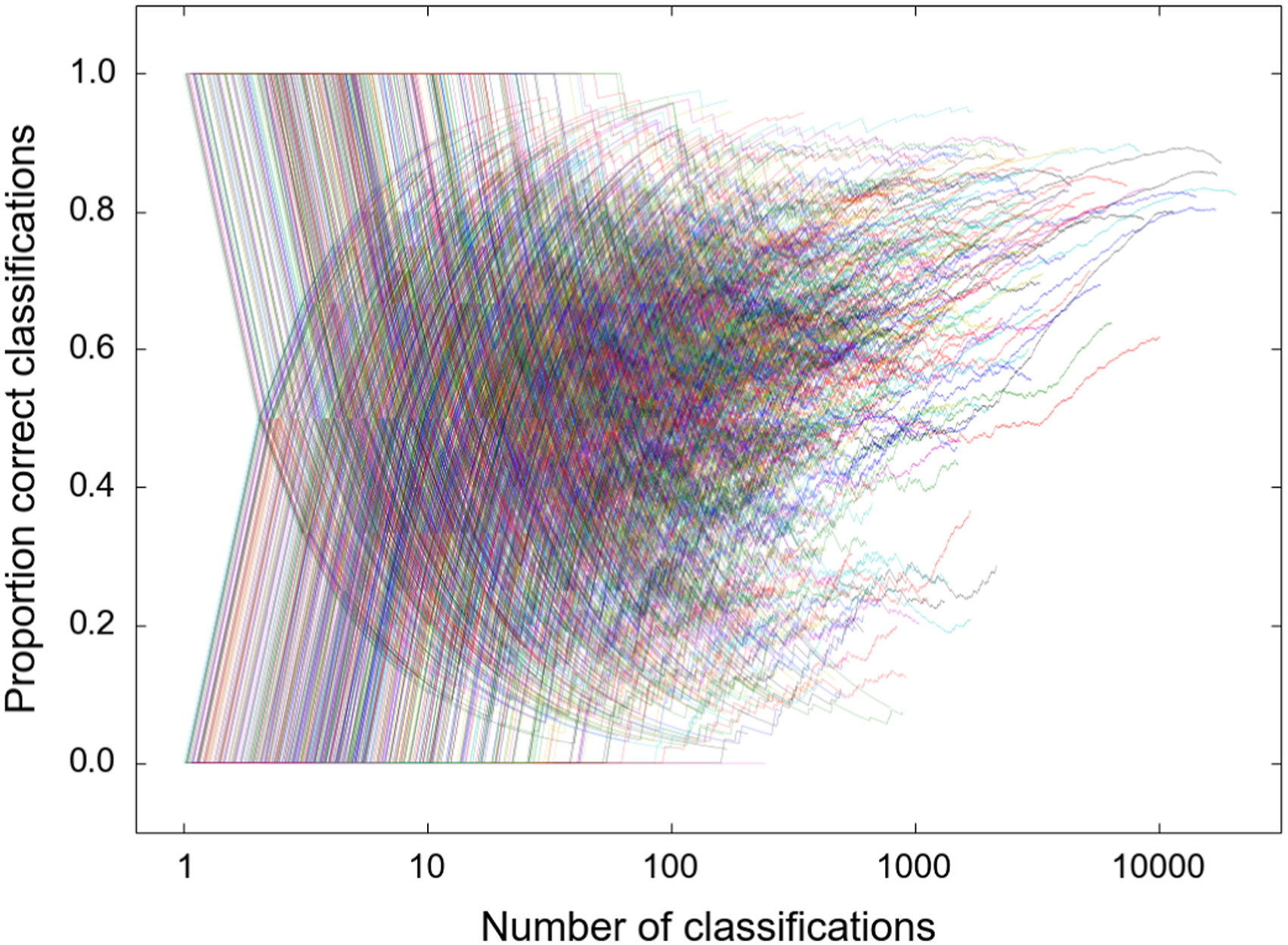
Figure 1 from the study, published as “The cost of coordination can exceed the benefit of collaboration in performing complex tasks” in Collective Intelligence.
Signifiance Statement
Collaboration is one of the fundamental processes in humans’ social lives. With the invention of digital communication technologies designed to further facilitate collaboration, identifying the keys to successful collaborations is more desirable than ever. Previous work in this area consists primarily of stylized tasks and therefore suffers from a lack of generalizability. In this work, we utilize a real-world citizen science platform to run experiments with subjects recruited from a diverse pool of non-expert participants. We show that when the task is complex, making decisions as an individual can be better than joint decision making in dyads, particularly where coordination requires time and effort. Our work can inform the design of collaboration platforms and advance the science of teamwork.
Abstract
Humans and other intelligent agents often rely on collective decision making based on an intuition that groups outperform individuals. However, at present, we lack a complete theoretical understanding of when groups perform better. Here, we examine performance in collective decision making in the context of a real-world citizen science task environment in which individuals with manipulated differences in task-relevant training collaborated. We find 1) dyads gradually improve in performance but do not experience a collective benefit compared to individuals in most situations; 2) the cost of coordination to efficiency and speed that results when switching to a dyadic context after training individually is consistently larger than the leverage of having a partner, even if they are expertly trained in that task; and 3) on the most complex tasks having an additional expert in the dyad who is adequately trained improves accuracy. These findings highlight that the extent of training received by an individual, the complexity of the task at hand, and the desired performance indicator are all critical factors that need to be accounted for when weighing up the benefits of collective decision making.
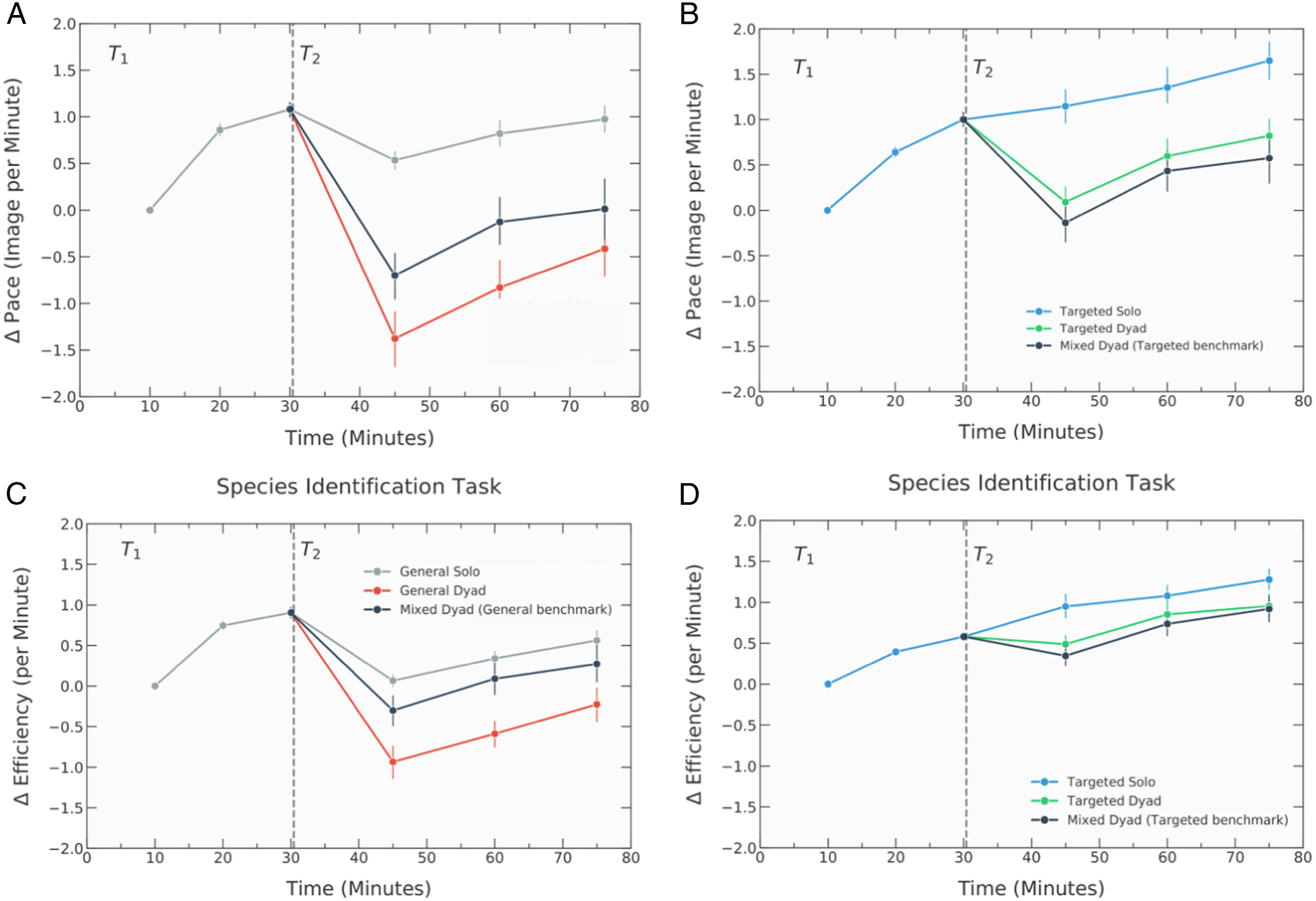
Figure 8. Change in pace over time. Differences between individuals and dyads over the course of T2 in terms of the pace of task completion. Error bars indicate one standard error of the mean
Cite: Straub, V. J., Tsvetkova, M., & Yasseri, T. (2023). The cost of coordination can exceed the benefit of collaboration in performing complex tasks. Collective Intelligence, 2(2). https://doi.org/10.1177/26339137231156912